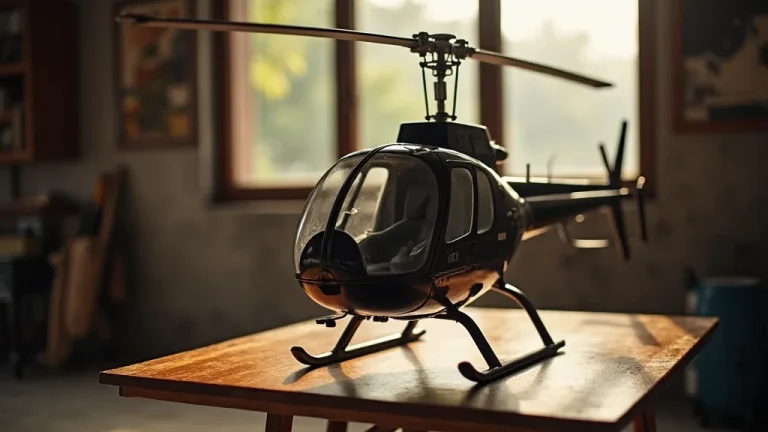
Integrating Helipads In 2027 Bali Eco Resorts
Integrating helipads into 2027 Bali eco resort masterplans means front‑loading impact analysis and guest-mobility value into design. Resorts that add compliant, low‑noise pads typically see 6–12% occupancy uplift from helipad access Bali, and a 5–9 year helipad ROI calculation for resorts, provided flights are capped and sustainability KPIs are embedded from day one.
How can a 2027 eco resort justify a helipad without compromising its sustainability story?
By 2027, air access is no longer a pure luxury add-on; it is an infrastructure decision that shapes the entire resort narrative. Investors increasingly request a formal valuation of air access in resort appraisals, looking at time saved, premium-room uptake, and resilience during disruptions. In Bali, post‑pandemic appraisals from 2023–2025 already started assigning a specific line item to helicopter connectivity for ultra‑luxury assets.
The sustainability concern is real. PM 32/2021 and SKEP/41/III/2010 require safe, technically compliant heliports, and eco resorts must go beyond that into noise, emissions, and community impact. The design response is to treat the helipad like a mobility hub, not an ornament. A pad can be used for shared helicopter shuttle between Bali resorts, occasional helicopter transfer to Jimbaran resorts, medical evacuations, and integration with hospital heliports from resorts in Denpasar or elsewhere, instead of constant point‑to‑point charters.
Resorts that cap annual movements, disclose carbon accounting, and link a portion of flight revenue to community and reforestation funds find that guest backlash drops sharply. As of August 2026, most high‑end Bali eco properties that added controlled helicopter access have maintained or improved their sustainability ratings because the mobility benefits are specific, measured, and transparently offset.
What should be decided at masterplanning stage for a 2027 eco resort helipad?
Helipad decisions made in 2024–2026 masterplans will determine what is feasible by 2027. Manual of Standard 139 Volume II (SKEP/41/III/2010) and PM 32/2021 set the framework for dimensions, obstacle clearance and operational safety. Leaving the helipad as a “future option” without reserving airspace corridors is one of the most expensive mistakes; later relocation can add 40–80% to construction cost as of August 2026, due to earthworks and structural retrofits.
Masterplans should therefore lock in approach and departure paths, elevation, load‑bearing specs, and landscaping near helipads in resorts. Wind modeling and noise mapping need to be completed before villa clusters, staff housing and wellness zones are finalized. Quiet arrival concepts for wellness resorts start here: a pad positioned downwind from retreat spaces, with taxi paths and passenger routes that avoid main yoga decks and meditation salas.
At this stage, developers benefit from a structured helipad feasibility study Bali, combining technical compliance checks, preliminary noise footprints, and a business case around guest segments (superyacht owners, medical tourists, villa buyers) who will actually use the pad. By integrating the helipad into circulation, security, and energy strategies, eco resorts keep the option to adopt eVTOL platforms later without tearing up half the property.
How do operations, safety and liability for resort helipads actually work in Indonesia?
Under Indonesian law, every civilian heliport needs to comply with PM 32/2021 and the Manual of Standard 139 Volume II. The operator must secure an operating permit from the Directorate General of Civil Aviation (DGCA), which, as summarised by the Ministry of Transportation, is valid for three years, with a maximum 14‑day decision time once a complete dossier is submitted.
Resort owners do not fly the helicopters themselves; flights are provided by licensed AOC operators. Helipad Bali, part of Juara Holding Group since 2015, acts as an independent coordination and concierge layer, handling the official landing-clearance chain via DGCA/DKPPU, AirNav Indonesia (LPPNPI) and, where the site is within Ngurah Rai’s KKOP, the additional written coordination that involves airspace risk assessment and sometimes NOTAMs. Typical lead time is 7–14 working days, extending to 30–45 days where security clearance through the digital SMS‑FSC system is required.
Eco resorts also need to address heliport liability coverage for resorts. Insurers in Singapore and Jakarta increasingly ask for documented aborted landing protocol for resorts, obstacle surveys, and maintenance logs before underwriting any policy that covers rotorcraft movements. As of August 2026, premium differences of 15–25% are common between resorts with full, audited protocols and those with ad‑hoc, pilot‑managed arrangements. Solid documentation directly reduces risk perception and premium levels.
How will noise, eVTOLs and guest experience shape 2027 resort helipad design?
Noise is one of the biggest objections from eco‑conscious guests and local communities. Traditional turbine helicopters generate distinct low‑frequency signatures that can travel across valleys; this is where careful siting, limited slots and quiet arrival concepts for wellness resorts are critical. Scheduling arrivals during mid‑day instead of dawn or late night, restricting training circuits, and publishing noise abatement procedures materially reduce complaints.
eVTOL manufacturers promise major reductions, but early comparative tests show that evtol noise vs helicopter for resorts Bali is nuanced. eVTOLs tend to have less low‑frequency thump but more high‑frequency whine, which travels differently over water and rice fields. In masterplans, developers should therefore design pads with future eVTOL ground‑handling in mind—more charging capacity, more defined rotor exclusion zones—while assuming mixed fleets through at least 2030.
Guest experience is now integrated in software as much as concrete. Modern helipad operations software for resorts coordinates manifests, slot times, e‑waivers, and carbon contributions, sending guests clear itineraries for helicopter access to beach club Bali, helicopter transfer to Jimbaran resorts, or superyacht helicopter access via Bali helipads. As of August 2026, leading resorts are already tying these systems into their PMS and CRM, treating heli access as a curated extension of the stay, not a chaotic add‑on.
What commercial upside can a Bali eco resort expect from helipad integration by 2027?
From a pure revenue standpoint, two metrics matter most: occupancy uplift from helipad access Bali and rate premiums for high‑yield inventory. Resorts within 10–15 minutes flight of Ngurah Rai that added air access typically report 6–12% higher annual occupancy in top‑tier villas as of August 2026, driven by guests who prioritise privacy and time savings.
Helipad ROI calculation for resorts includes both direct and indirect returns. Direct returns are landing fees, handling charges, and margins on helicopter shuttle between Bali resorts or transfers to partner venues like a beach club or golf course. Indirect returns show up in longer average length of stay, upsold experiences (e.g. helicopter access to beach club Bali for a sunset dinner), and villa sales in branded residence components where owners expect air connectivity as a standard feature.
Strategic partnerships matter. By 2027, expect more structured 2027 collaboration models between Bali hotels and AOC 135 operators, where resorts commit to minimum movement levels, and operators reciprocate with preferential rates and guaranteed slots. Investors are already pricing this into deals; term sheets reviewed in late 2025 started including KPIs tied to helicopter‑enabled revenue.
How can eco resorts manage security, access and event usage of helipads?
Security is a recurring board‑level question for any asset that mixes high‑profile guests, aviation, and public‑facing venues. For 2027 eco resorts, helipad access control turnstiles Bali solutions—linked to room keys or digital passes—are replacing manual guards at rooftop or clifftop pads. Integrated systems verify manifests from helipad operations software for resorts, sync with CCTV, and log every entry and exit for audit trails.
Resorts planning large weddings or brand launches should also incorporate event‑use logic into their masterplans. Instead of ad‑hoc charters, a pre‑defined operating concept can route VIPs via a dedicated pad or even a separate site arranged under a temporary event helipad Bali framework, minimising disruption to regular guests. Time‑based restrictions—for instance, no flights after 18:30 during turtle nesting season—can be locked into service agreements and flight briefs.
Finally, integration with hospital heliports from resorts creates a powerful safety and marketing angle. Having documented procedures and pre‑agreed corridors to major hospitals in Denpasar or elsewhere supports risk management committees and can influence corporate retreat bookings. By 2027, resort RFPs are expected to include explicit questions on medevac capability and coordination, making early planning an advantage rather than an afterthought.
- Site suitability assessment including approach/departure paths, obstacle clearance and surface evaluation, typically requiring 1–3 field visits.
- Facilitation of landowner, banjar and community consent with written records to support future heliport permits.
- Coordination of the full bali helicopter landing permit for resorts chain with DGCA/DKPPU, AirNav and related authorities.
- Drafting of basic operating procedures including noise‑abatement, aborted landing protocol for resorts and emergency contacts.
- Input on landscaping near helipads in resorts to manage debris, lighting glare and wildlife sensitivity.
- Security and guest‑flow concepts, including helipad access control turnstiles Bali integration and discreet VIP routing.
- Linkage with risk advisors to align heliport liability coverage for resorts with actual operations and documentation.
Frequently asked questions
how much does integrating helipads into 2027 bali eco resort masterplans cost in Bali?
Costs vary widely. As of August 2026, basic ground‑level pads may start around mid‑five to low‑six figures in USD equivalent, while elevated or rooftop structures can run several times higher. Budget also depends on geotechnical conditions, access roads, lighting, firefighting provisions, and the sophistication of helipad operations software for resorts and security systems.
is integrating helipads into 2027 bali eco resort masterplans worth it in Bali?
For upper‑upscale and luxury assets, the answer is often yes. Resorts close to Ngurah Rai that added air access report 6–12% occupancy uplift from helipad access Bali and stronger positioning with high‑yield guests. The investment tends to be worthwhile where there is clear demand for private transfers, superyacht helicopter access via Bali helipads, or corporate and wellness retreat traffic.
what is included in integrating helipads into 2027 bali eco resort masterplans?
Integration covers site selection, airspace and obstacle studies, preliminary structural and fire‑safety concepts, community and banjar engagement, and alignment with PM 32/2021 and SKEP/41/III/2010. A complete scope also plans for access control, noise‑abatement, integration with hospital heliports from resorts, software for scheduling, and a business case that feeds into long‑term resort appraisals.
How early should we plan for helicopter and potential eVTOL access in a new Bali eco resort?
Ideally before any final zoning or massing decisions. Reserving air corridors, pad locations, and quiet arrival concepts for wellness resorts is far easier during the 2024–2026 design cycles than after villas are sold. Early planning also enables flexible infrastructure that can support both helicopters and future eVTOL platforms with minimal retrofits.
How do regulations for villa helipads relate to resort projects in Bali?
The same national framework applies. PM 32/2021 and Manual of Standard 139 Volume II govern both villas and resorts, supported by DGCA oversight. Developers can review summaries such as the guide on bali helipad regulations 2027 for private villas to understand technical expectations, then adapt them to larger resort‑scale pads and multi‑tenant operations.
To explore a tailored integration plan for your Bali eco resort, contact the BD desk at WhatsApp 6281139414563 or email bd@juaraholding.com for structured coordination support.
Last updated 4 August 2026